Bio
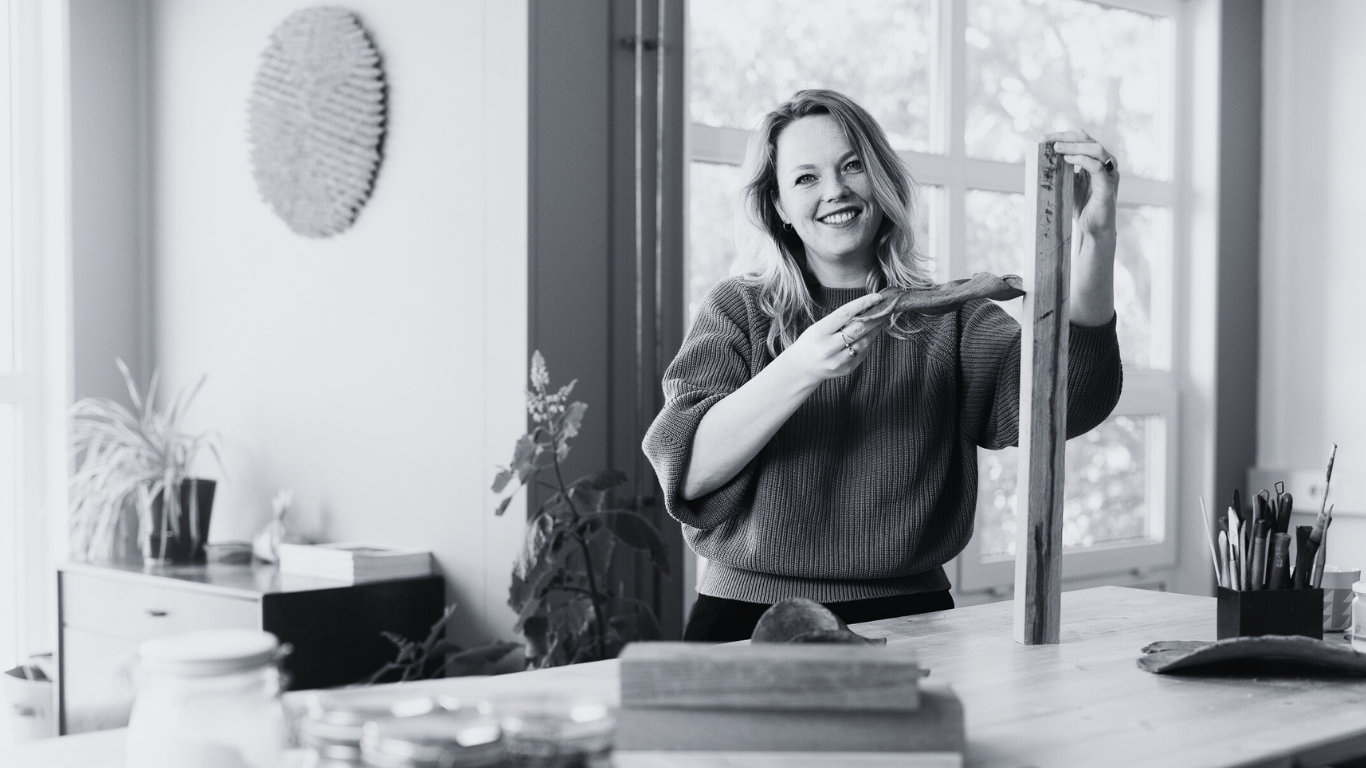
Working with self-developed, bio-based composites made from wood fibres, Van den Dragt considers the behavior of the material during the making process to be an essential part of the work itself. Actions such as mixing, drying, compressing, and curing shape the final form as much as her own interventions do. Her conscious decision to avoid synthetic and chemical additives is motivated both ethically and aesthetically: it stems from respect for the material’s natural origin and an awareness that both maker and artistic production remain inseparably connected to ecological systems.
Her sculptures evoke associations with fungi, mycelium, and lichen. These references are not literal, but structural and conceptual: pointing to forms of growth rooted in connection, exchange, and adaptability.
Underlying her work is the understanding that neither the artist nor the artwork exists outside natural cycles of change. In this way, Van den Dragt reflects on conventional ideas of ownership and permanence, proposing instead a more reciprocal relationship between matter, time, and life.
Van den Dragt’s current practice builds on earlier works made from reclaimed wood, shown through fairs, media features, and commissions. Her studio is based in Nijmegen, The Netherlands.
Met zelfontwikkelde, biobased composieten van houtvezels beschouwt Van den Dragt het gedrag van het materiaal tijdens het maakproces als een essentieel onderdeel van het werk. Handelingen als mengen, drogen, verdichten en uitharden zijn even bepalend voor de uiteindelijke vorm als haar eigen ingrepen. Haar bewuste keuze om synthetische en chemische toevoegingen te vermijden is zowel ethisch als esthetisch gemotiveerd: het komt voort uit respect voor de natuurlijk herkomst van het materiaal en het besef dat zowel maker als artistieke productie altijd verbonden zijn met ecologische systemen.
Haar sculpturen roepen associaties op met zwammen, mycelium en korstmossen. Deze verwijzingen zijn niet letterlijk, maar eerder structureel en conceptueel: ze benadrukken vormen van groei die gebaseerd zijn op verbinding, uitwisseling en aanpassingsvermogen.
Aan haar werk ligt het inzicht ten grondslag dat noch de kunstenaar, noch het kunstwerk buiten natuurlijke cycli van verandering staat. Daarmee reflecteert Van den Dragt op gangbare ideeën over eigenaarschap en permanentie, en stelt zij een meer wederkerige relatie voor tussen materie, tijd en leven.
Van den Dragts huidige praktijk bouwt voort op eerdere werken van resthout, getoond op beurzen, in media en via opdrachten. Haar atelier is gevestigd in Nijmegen.